
Dr Jade King is a Hepatology Specialty Registrar and an NHSBT Clinical Research Fellow leading the EquiLT-UK project, which focuses on health inequalities in liver transplantation. For World Hepatitis Day, Jade reflects on why this area of research matters and how working with the Systematic Review Initiative has helped shape the project.
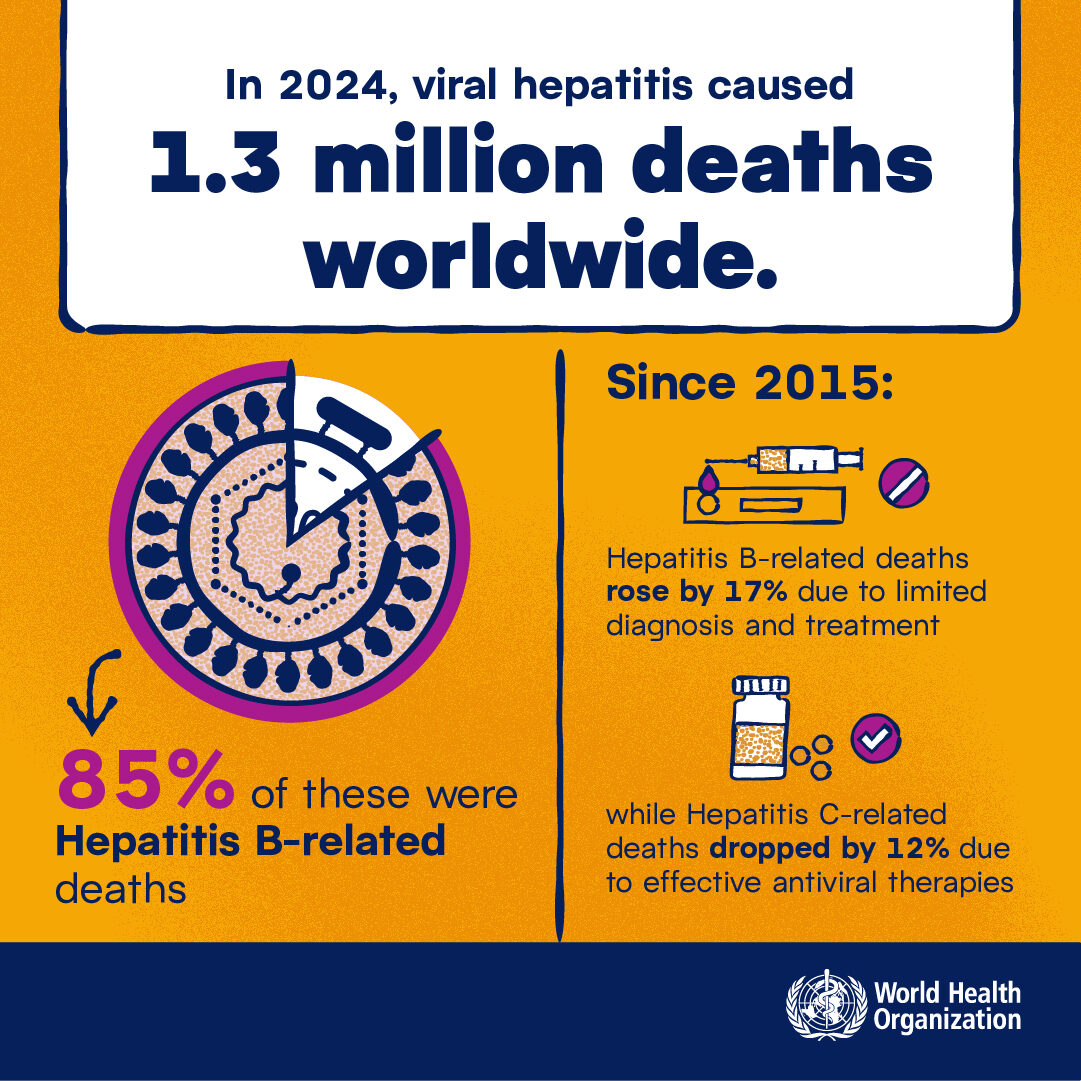
While the World Health Organization has set ambitious targets for the elimination of viral hepatitis by 2030, hepatitis remains a major global health challenge. Despite major advances in hepatitis B vaccination and hepatitis C treatment, viral hepatitis was still responsible for an estimated 1.3 million deaths globally in 2025, equivalent to ~3,500 deaths every day (global-reporting-for-viral-hepatitis-2025.pdf).
The Global Hepatitis Report 2026 highlights the urgent need to address barriers that limit access to healthcare, including stigma and inequitable access to prevention and treatment services. These barriers contribute to unequal rates of advanced liver disease among the most socially disadvantaged groups, a topic that sits at the heart of the EquiLT-UK project and one that is particularly important to me as a clinician working in liver disease and transplantation. For many patients with end-stage liver disease, liver transplantation remains the only curative treatment option, so access to such life-saving care should not depend on a person’s background. Yet in clinical practice, I regularly see how social circumstances can shape a patient’s ability to access care, long before transplantation is even considered.
This World Hepatitis Day, I wanted to reflect on the challenges faced by people from lower socio-economic backgrounds in their journey to liver transplantation, and why understanding these inequalities matters.
With the support of the Systematic Review Initiative, we recently explored how social deprivation affects access to liver transplantation, in a systematic review published in BMJ Public Health. One of the challenges we encountered was that social deprivation is difficult to define consistently across studies. Historically, socio-economic status has often been defined using single factors, such as income or employment. However, our review highlighted the value of composite deprivation indices, which better capture the complex interplay between education, food security, housing stability, and access to local infrastructure and services.
Using these broader measures, we found that 79% of included studies reported higher mortality before transplantation among the most deprived patients. These poorer outcomes likely reflect the many barriers vulnerable patients face when accessing healthcare, including reduced access to vaccination and hepatitis treatment, poorer transport links, lower health literacy, and challenges navigating referral pathways.
Although the review was not limited specifically to patients with viral hepatitis, hepatitis disproportionately affects socially disadvantaged and marginalised populations worldwide. Understanding how deprivation influences access to transplantation is therefore an important part of reducing inequalities in liver disease outcomes more broadly.
As most studies included in the review were conducted in the US, these findings cannot be directly generalised to the NHS and other universal healthcare systems. However, the review highlights an important evidence gap and the need for further UK-based research into how social deprivation affects liver disease and transplant outcomes. Through the EquiLT-UK project, we hope to help address this gap by generating evidence on how inequality influences access to transplantation within the NHS. This will help inform future public health interventions and move closer to the WHO goal of eliminating viral hepatitis as a public health threat by 2030.